
"from South America"
4000 article(s) found

Bolivia, South America-Tower gives Xi Champion Manor Agrotakesi the flavor of washing iron pickup truck?
Professional coffee knowledge exchange more coffee bean information please follow the coffee workshop (Wechat official account cafe_style) South America Bolivia | Tower to Xi Champion Manor Agrotakesi washed iron truck flavor? The elevation of Ta Jiexi extends from 1900 meters to 3000 meters, and so far, she is still considered to be one of the highest elevation estates in the world that are produced and famous for their quality.

Introduction to the characteristics of Brazilian boutique coffee flavor manor with mellow taste
The Portuguese expedition established a colony in Pakistan in the 1630s. The Governor was appointed in 1549. The entire colony was then United along the Atlantic coast under Portuguese rule. The French invaded in 1555, occupied the equivalent of present-day Rio de Janeiro, and intended to set up a French colonial stronghold in South America. However, because the French were unable to attract colonists from Europe,

Coffee bean producing areas-South America-Brazil (Brazil)
Well-known representative coffee: Santos Brazil is the world's largest coffee producer, with the first total output in the world, accounting for about 1% of the world's total output, mainly in the central and southern provinces. Brazil is suitable for growing coffee, the terrain is relatively flat, most coffee gardens are less than 1200 meters above sea level, and there is no shade from big trees, because the raw and ripe berries are harvested at the same time, so it is not a fine product.

The coffee-producing area of El Salvador, northwest of Central America and bordering the Pacific Ocean to the south, introduces the Iza of Sonsonate province.
In El Salvador, the coffee beans rich in the Kuskabapa region are the best, slightly lighter, fragrant, pure and slightly sour. Like Guatemala and Costa Rica, coffee in El Salvador is graded according to altitude, and the higher the altitude, the better the coffee. The best brand is Pip, whose quality has been recognized by the American Organic Certification Society. In addition
Ecuador, a coffee producer in South America
The Arabian Coffee Tree was first introduced to Ecuador (Ecuador) in 1952 and its coffee is of good quality, especially the coffee harvested in early June. Ecuadorian coffee beans can be divided into two varieties: Galapagos and Gigante, both of which have the characteristics of large granules and heavy weight. Ecuadorian coffee can be divided into first class (No.1) and excellent (Extra Superior) according to its quality.

The taste of Peruvian coffee is smooth and smooth. Introduction to the characteristics of fine coffee beans and organic coffee in manor area.
In 1542, the Spanish royal family set up the Government House in Lima and established the Governor's District of Peru, which became the center of Spanish colonial rule in South America. At that time, Peruvian commerce was prosperous, merchants controlled most of South America's import and export trade, and the precious metals and other goods looted by the Spaniards from South America were shipped out of Peru. The colonists encroached on land in Peru, forced the Mita system, and forced the Indians to

Coffee bean producing areas-South America-Brazil (Brazil)
Well-known representative coffee: Santos Brazil is the world's largest coffee producer, with the first total output in the world, accounting for about 1% of the world's total output, mainly in the central and southern provinces. Brazil is suitable for growing coffee, the terrain is relatively flat, most coffee gardens are less than 1200 meters above sea level, and there is no shade from big trees, because the raw and ripe berries are harvested at the same time, so it is not a fine product.

Introduction to Ecuador Arabica Coffee in South America Hassendaca, Santa Cruz Island, Galapagos Islands
The coffee beans produced in Ecuador's Galapagos Islands are organic coffee beans, thanks to the unique ecological environment such as volcanic soil and microclimate, coupled with the fact that they do not use any chemical fertilizers or pesticides, they are recognized as natural green boutique coffee. this naturally grown coffee has a mild taste with a hint of flowers and fruit and caramel. It is understood that the Galapagos Islands are far from Eritrea.

Coffee producing countries in the world introduce coffee bean producing countries in South America
Brazil Brazil is the first coffee producer and marketer in the world. The annual output of coffee beans exceeds 30 million bags (60 kilograms each). Coffee experts do not think highly of their beans, saying that they are too monotonous, bitter, sour and fragrant enough, and are not even included in the list of producing areas of fine coffee. Because most of the Brazilian coffee gardens are less than 1200 meters above sea level, there are no big trees to shade, and they are picked.

Peruvian Coffee Flavor description Variety characteristics of High-quality Coffee beans
In 1542, the Spanish royal family set up the Government House in Lima and established the Governor's District of Peru, which became the center of Spanish colonial rule in South America. At that time, Peruvian commerce was prosperous, merchants controlled most of South America's import and export trade, and the precious metals and other goods looted by the Spaniards from South America were shipped out of Peru. The colonists encroached on land in Peru, forced the Mita system, and forced the Indians to
Introduction of major coffee producing areas in the world Central and South American coffee beans, African coffee beans, Asian coffee beans
[introduction] Coffee comes from coffee beans, which are harvested and processed from the fruit of trees. Coffee trees grow at the center of the equator, between latitudes of 25 degrees south and north, and are called coffee belts in the homes of tropical or subtropical countries. at present, raw coffee comes from coffee beans, which are harvested and processed from the fruits of the trees. Coffee trees grow at the center of the equator.
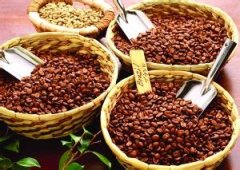
A brief introduction to the treatment method of grinding degree and baking degree of fine coffee beans in Santa Rita Manor
Growing coffee also requires daylight and proper shade, which is most suitable for planting on fertile soil or volcanic ash soil. Therefore, the origin of coffee is widely distributed in South America, Central America, the West Indies, Asia, Africa, Arabia, the South Pacific and Oceania. Such as Ethiopia and Tanzania in Africa, Brazil, Colombia, Jamaica, Guatemala and Mexico in Central and South America.
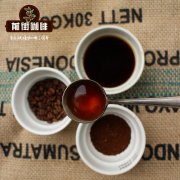
What are the characteristics of South American coffee beans? how do Colombian coffee beans taste highly balanced?
Professional Coffee knowledge Exchange more coffee bean information please follow Coffee Workshop (Wechat official account cafe_style) Front Street-Columbia Coffee introduction from Alaska in the north to Tierra del Fuego in the south, the Cordillera Mountain system, which stretches for 15,000 kilometers through the western part of the North and South American continents, is the longest wrinkled mountain system in the world. Its section in North America is the famous Rocky Mountains, Canada.

Is Colombian Coffee beans or varieties Colombian Coffee Natural conditions win at the starting line
For more information about coffee beans, please follow the coffee workshop (Wechat official account cafe_style). Colombia is located in northwestern South America, bordering Venezuela and Brazil to the east, Ecuador and Peru to the south, Panama to the northwest, the Caribbean to the north and the Pacific Ocean to the west. With a land area of about 1.142 million square kilometers, it ranks first in South America.

Taste characteristics of Peruvian coffee with smooth taste introduction of fine coffee beans and organic coffee
In 1542, the Spanish royal family set up the Government House in Lima and established the Governor's District of Peru, which became the center of Spanish colonial rule in South America. At that time, Peruvian commerce was prosperous, merchants controlled most of South America's import and export trade, and the precious metals and other goods looted by the Spaniards from South America were shipped out of Peru. The colonists encroached on land in Peru, forced the Mita system, and forced the Indians to
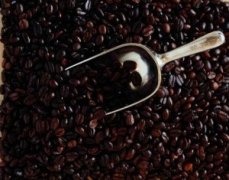
Ecuadorian coffee beans from South America
Coffee origin: the Ecuadorian Arabian Coffee Tree was first introduced to Ecuador (Ecuador) in 1952 and its coffee quality is very good, especially the coffee harvested in early June. Ecuadorian coffee beans can be divided into two varieties: Galapagos and Gigante, both of which have the characteristics of large granules and heavy weight. Ecuadorian coffee can be divided into first class (No.1) and special coffee according to quality.

The per capita annual coffee consumption in China is less than 6 cups. Understand the development of coffee drinking habits in Europe, America, Japan and South Korea.
Professional coffee knowledge exchange more coffee bean information please follow the coffee workshop (Wechat official account cafe_style)

South America Guatemala Isabel Manor Organic Coffee Starbucks selected Coffee
Saint Isabel Manor is located in the north of Alta Verapaz in the San Cristbal province of Guatemala, surrounded by scenic mountains, rainforests and impressive vegetation, close to Koban, which produces extremely hard beans. The elevation of the manor is 4500 meters (1372m), and the annual precipitation is 3000mm. Coffee trees bloom from April to June, and the harvest period is from December to April. Manor in

Introduction of Peruvian Coffee Variety characteristics of Fine Coffee Bean Flavor Manor
In 1542, the Spanish royal family set up the Government House in Lima and established the Governor's District of Peru, which became the center of Spanish colonial rule in South America. At that time, Peruvian commerce was prosperous, merchants controlled most of South America's import and export trade, and the precious metals and other goods looted by the Spaniards from South America were shipped out of Peru. The colonists encroached on land in Peru, forced the Mita system, and forced the Indians to
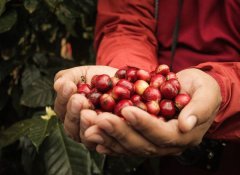
Costa Rica where coffee beans are grown in Central and South America.
Costa Rican coffee cultivation was introduced by Cuba in 1779 and exported for the first time in 1820. There are about 32000 coffee farmers, with an average planting area of less than one hectare (10000 hectares) per farmer. Costa Rica has a population of 41 billion (2006), with a coffee planting area of 82500 hectares and an annual production of 1.7 million bags (60kgs per bag). The annual domestic consumption is 380000 bags.